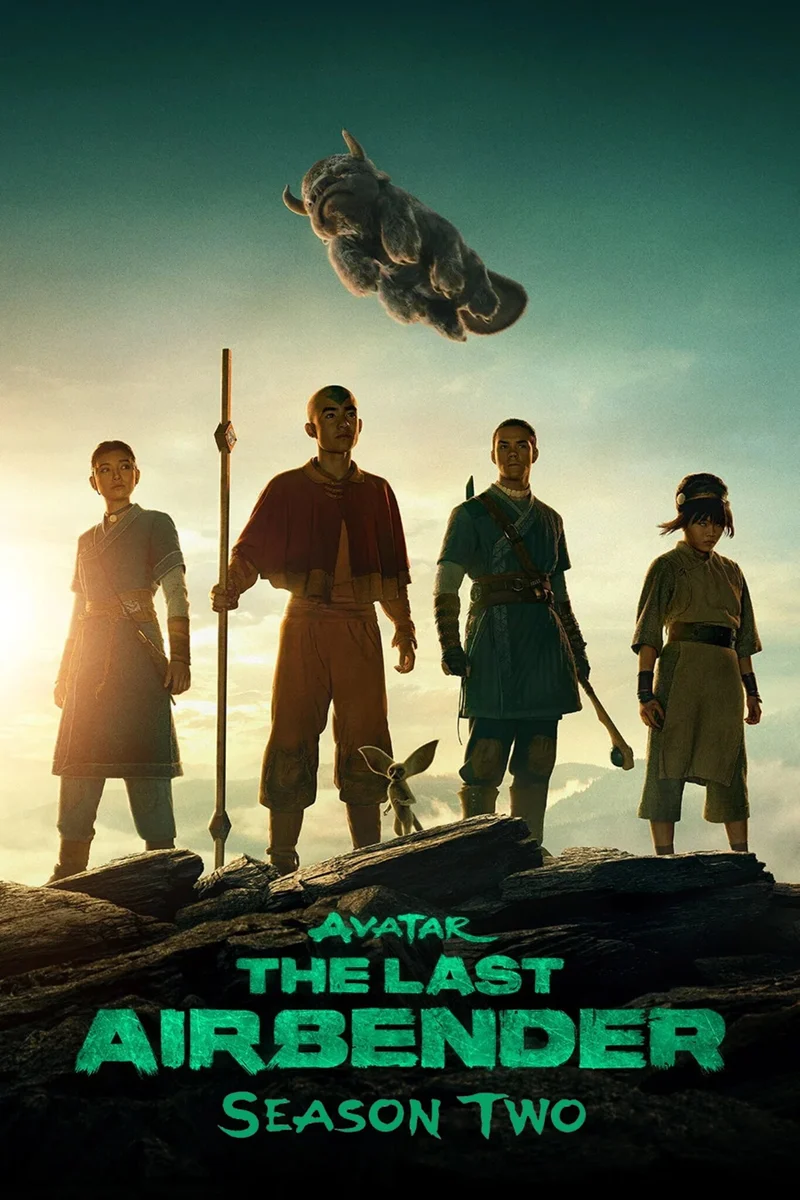
Avatar: The Last Airbender gives a young traveller a responsibility that no single skill can complete. Netflix’s live-action version follows Aang in a world divided by elemental powers, where learning also means accepting help from people with different experiences.
Be clear about the format
This is the live-action adaptation of the Nickelodeon animated series. Gordon Cormier plays Aang, with Kiawentiio as Katara, Ian Ousley as Sokka and Dallas Liu as Zuko. The premise identifies Aang as the person able to master all four elements after an absence of a century, while the Fire Nation’s war has transformed the world. Those anchors distinguish the television adaptation from the animation and other similarly named films. Episode numbering and the pace of introductions should therefore be read within this version’s own format.
The four elements are also a learning problem
An elemental system can be enjoyed as fantasy, but it also gives a concrete shape to a broader question: can someone remain comfortable with one way of acting when a task demands several? Watch what Aang needs to learn from companions rather than treating them as a team assembled only to assist him. Knowledge can be practical, cultural or emotional. A person who does not share the central power may still understand a situation that its bearer cannot read. That makes cooperation part of the journey, not a substitute for it.
Follow the relationships before the lore
New viewers can begin with the live-action opening and let the world’s history acquire meaning through its effects on the characters. Animation fans can compare what performance, physical space and a different episode structure emphasise. Neither approach requires an exhaustive catalogue of future abilities or identities. A useful discussion asks how each traveller’s idea of duty differs from the others. Keeping that question beside the adventure helps distinguish responsibility freely accepted from responsibility imposed by a title, a family or a war.