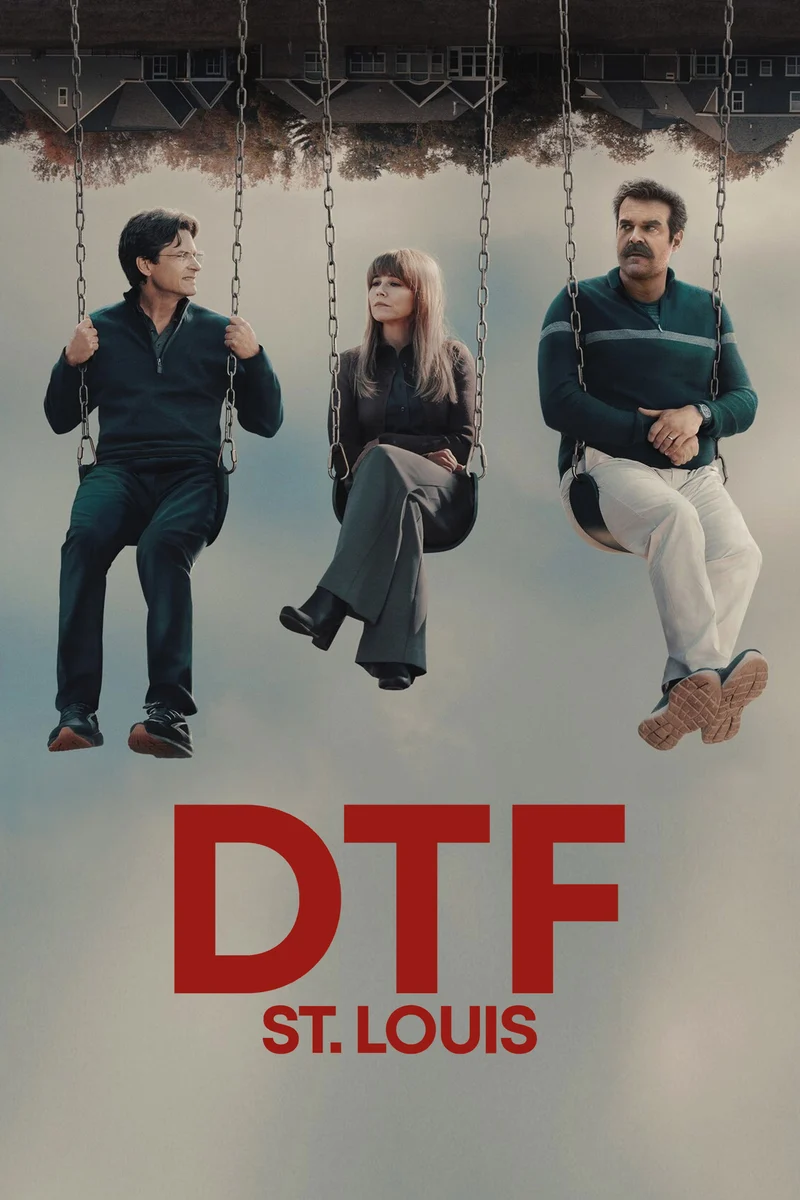
DTF St. Louis takes an unstable middle-aged love triangle and introduces a death. Its compact setup invites two kinds of attention at once: what happened, and what the people involved believed they were entitled to want.
The premise without the solution
HBO describes Steven Conrad’s seven-episode limited series as a darkly comic story about a love triangle involving three adults facing middle age, one of whom ends up dead. Jason Bateman, David Harbour and Linda Cardellini lead the cast, and Conrad writes and directs. That is enough to establish the dramatic contract without identifying a victim or explaining a motive. The title belongs to a particular limited story, so it is more useful to approach it as a developing relationship mystery than as an open-ended procedural.
Why middle age changes the stakes
A triangle can be reduced to jealousy, but age adds a different question: what does someone imagine they have missed? A new relationship may represent excitement, escape or evidence that an earlier life is still available. Those motives can conflict without any participant describing themselves as cruel. Watch for the promises people make to themselves as well as the promises they make aloud. A dark comedy can make a bad explanation funny while allowing the consequences of that explanation to remain serious.
Keep the mystery wider than a suspect list
It is tempting to measure every scene only by whether it contains a clue. Also ask what version of the relationship each person is trying to preserve. A contradiction may expose shame or self-deception before it proves a crime. For a group discussion, separate what the story shows from what a character claims happened. That distinction keeps the conversation specific and spoiler-conscious, especially when friends have reached different episodes. The central death need not erase the smaller choices that brought the triangle together.