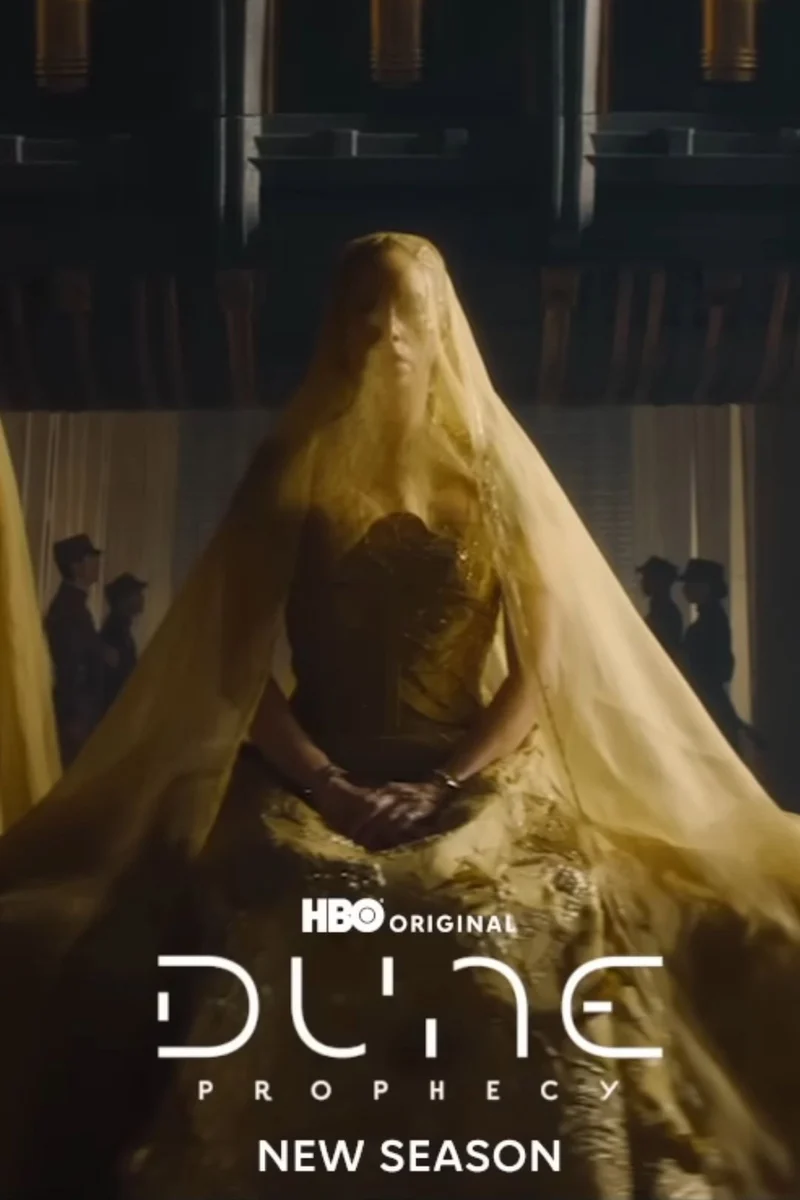
Dune: Prophecy shifts attention from a familiar hero to the people building a lasting institution. Its distant setting invites a different kind of question: how do private ambitions become rules that later generations experience as destiny?
A separate point on the Dune timeline
HBO places the series roughly ten thousand years before Paul Atreides. It follows two Harkonnen sisters confronting forces that threaten humanity and helping establish what becomes the Bene Gesserit. The series is inspired by Sisterhood of Dune, by Brian Herbert and Kevin J. Anderson. Emily Watson and Olivia Williams lead the cast, and Alison Schapker is the showrunner. These details identify an earlier institutional story, rather than a direct episode-by-episode continuation of the Dune films or another version of Paul’s immediate journey.
Power that outlives its founder
An institution can survive by turning an individual’s choices into training, procedure and tradition. That makes origins worth examining carefully. Ask which problems the sisters believe they are solving and what kind of authority their solution requires. A plan can be presented as protection while limiting the choices of people who arrive later. The long distance from Paul also makes patience a meaningful form of power: a goal measured across generations has different moral pressures from a crisis that demands a decision today.
A useful route for new and returning viewers
Familiarity with Dune supplies associations, but the immediate task is following this series’ people and competing loyalties. Keep names attached to actions rather than trying to reconstruct the entire universe at once. Returning fans can consider how a respected order might look less inevitable when its beginnings are still contested. The official second-season production announcement does not itself establish every future release detail. The more durable viewing question is how the story distinguishes conviction, calculation and obedience when all three can use the language of service.