
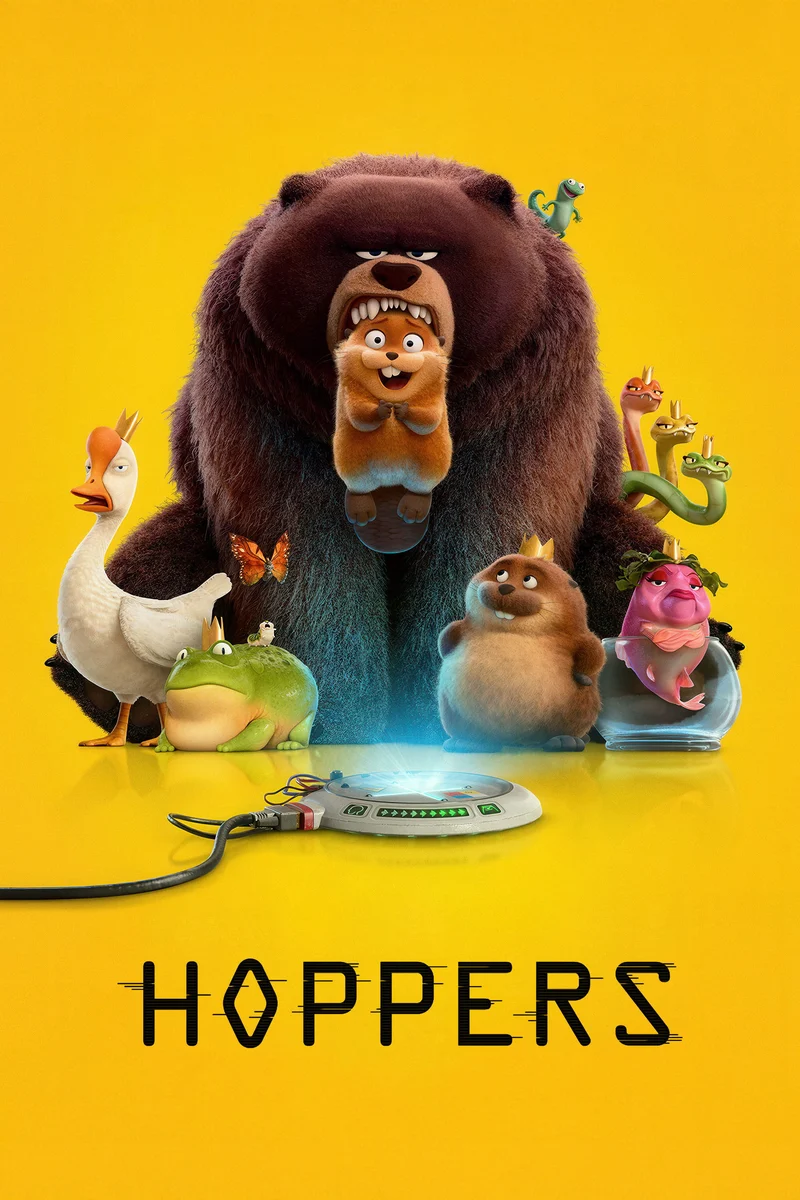
Pixar’s Hoppers follows Mabel, who uses experimental technology to place her consciousness inside a robotic beaver. Her plan to protect a threatened glade becomes an encounter with an animal society whose rules she must learn from within.
A disguise that changes the perspective
Pixar identifies Mabel as an animal-lover determined to prevent the destruction of habitats she cares about. Becoming a beaver gives her an unusual route into the problem, but enthusiasm for animals is different from understanding how their community works. That gap gives the premise both its comic engine and a practical question about empathy: what does listening require when someone enters a world convinced that they already know how to help?
The pond has its own politics
The official character material describes King George as the pond’s optimistic mammal leader, while Mayor Jerry pursues a highway through the glade. These competing forms of leadership give the environmental conflict recognizable human dimensions. Rules can enable cooperation, and an elected official’s priorities can clash with those of the creatures outside the electorate. Discussing those pressures is more illuminating than treating every animal as a single unified voice or every disagreement as a simple misunderstanding.
Technology as access, not an easy answer
The robotic body makes communication possible, but a tool cannot supply trust on its own. The premise invites viewers to separate the power to enter another community from permission to act for it. It also gives a family audience room to discuss local habitats without requiring a lecture before the film. Mabel’s determination, the scientist’s invention and the animals’ own interests form different parts of the problem. The question is how those parts can work together when an urgent plan meets a community with its own priorities.