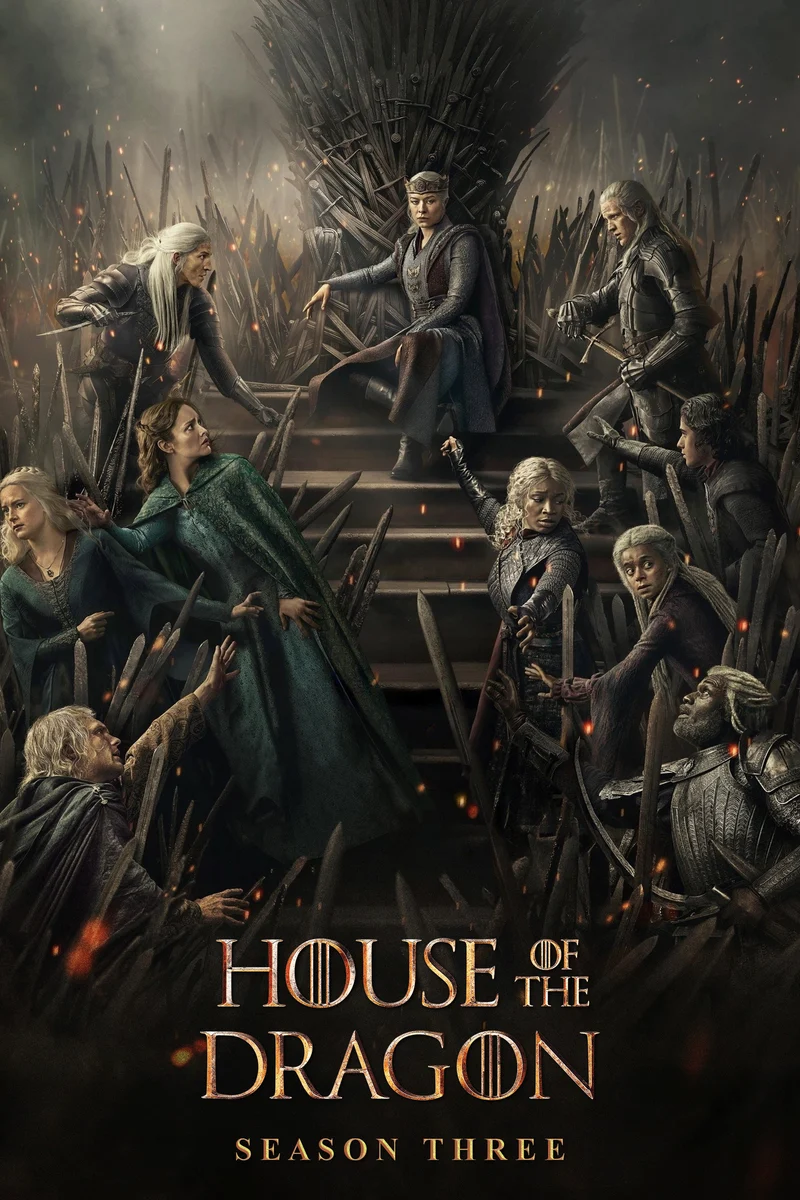
House of the Dragon takes the Targaryen family from background legend to the centre of a political drama. Its place before Game of Thrones makes inherited power, disputed loyalty and the cost of rule the useful starting points.
A dynasty rather than a distant cameo
HBO identifies the series as an adaptation of George R. R. Martin’s Fire & Blood, created by Martin and Ryan Condal. The subject is House Targaryen in an earlier Westeros. That gives newcomers a clearer entry point than trying to memorise every later family connection. Begin with who believes they should govern, which relatives support that claim, and what those supporters expect in return. A family relationship can also be an alliance, a threat or a disputed political obligation.
How to follow a crowded court
The useful distinction is between a character’s public position and private attachment. A promise to a relative need not have the same meaning to a council, an army or a rival claimant. When the story changes location, ask which decision brought the characters there and whose authority they recognise. This keeps the drama legible without turning each conversation into a genealogy quiz. Dragon imagery supplies scale, but the political question is who gets to command that power.
A sensible first viewing question
Do you need Game of Thrones first? The earlier setting and separate Targaryen focus make this a different narrative entry point, although familiarity with Westeros adds context. Follow the series in its own episode order rather than using later history to predict every outcome. Readers of Fire & Blood can instead consider what changes when a broad historical account becomes scenes with individual perspectives. Neither approach requires searching for a character’s fate before meeting them on screen.