
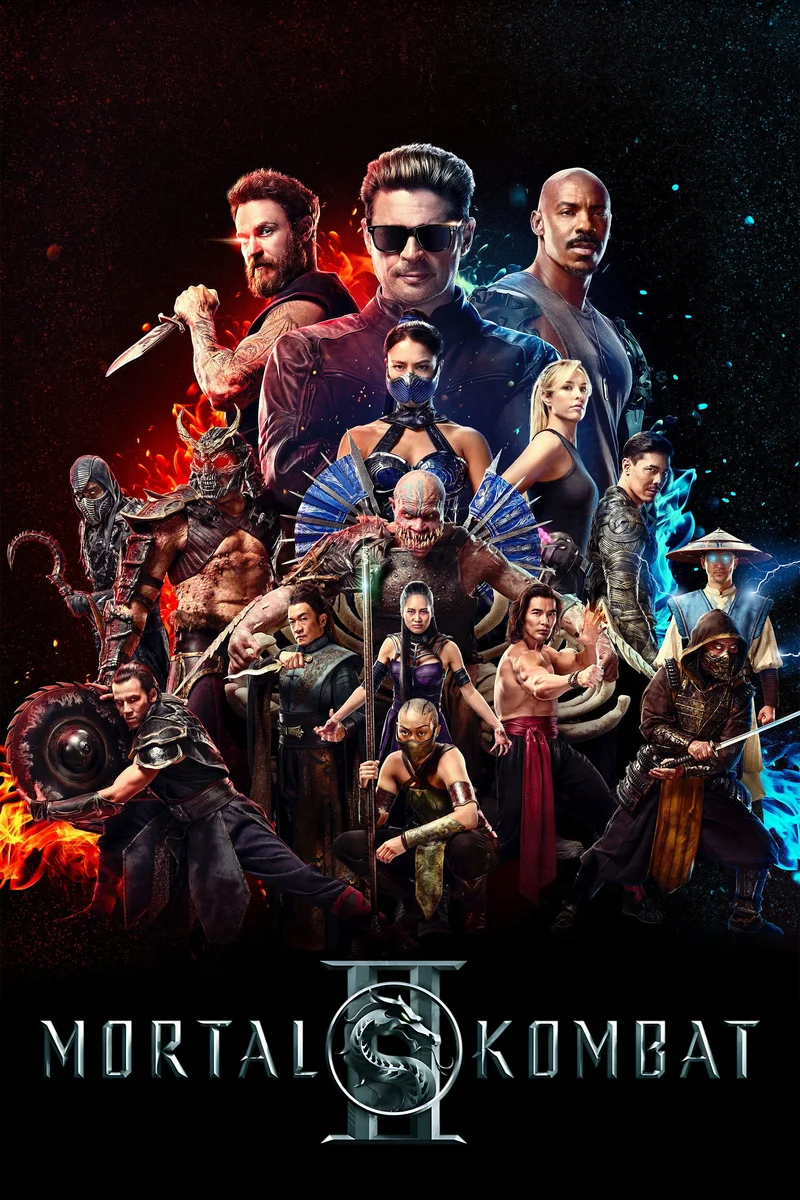
Mortal Kombat II continues the film series based on the fighting games, with Karl Urban joining as Johnny Cage. The official premise places its champions against Shao Kahn’s threat to Earthrealm, making a tournament-scale conflict into a struggle over the world they defend.
A new personality inside an established contest
Johnny Cage changes the ensemble before he changes the outcome of any fight. A fighting-game adaptation has to make each participant recognizable through temperament as well as physical technique. Urban’s addition gives returning characters another kind of personality to encounter. The official cast also includes Hiroyuki Sanada as Scorpion and Joe Taslim as Bi-Han, so familiar names and relationships remain part of the sequel’s framework.
Combat needs a reason to matter
The premise identifies Shao Kahn’s rule as a threat to Earthrealm and its defenders. That establishes more than an abstract competition: the characters’ victories and defeats have consequences beyond their individual pride. A useful discussion can separate the spectacle of a fight from its dramatic purpose. Who needs the victory, what does losing expose and how does a character’s chosen method express their values? Those questions make action legible even to someone unfamiliar with the games.
Game and film use different kinds of suspense
Simon McQuoid returns as director, with Jeremy Slater credited for the screenplay. In a game, the player participates in timing and execution; a film controls the sequence and viewpoint. The adaptation challenge is therefore to preserve the identity of combat while building suspense through performance, editing and stakes. The studio describes a deliberately brutal, gory adventure, so animation or game origins should not be read as a family-suitability label. For a spoiler-light introduction, the confirmed characters and Earthrealm conflict provide enough context without cataloguing every finishing move or revealing the contest’s outcome.