
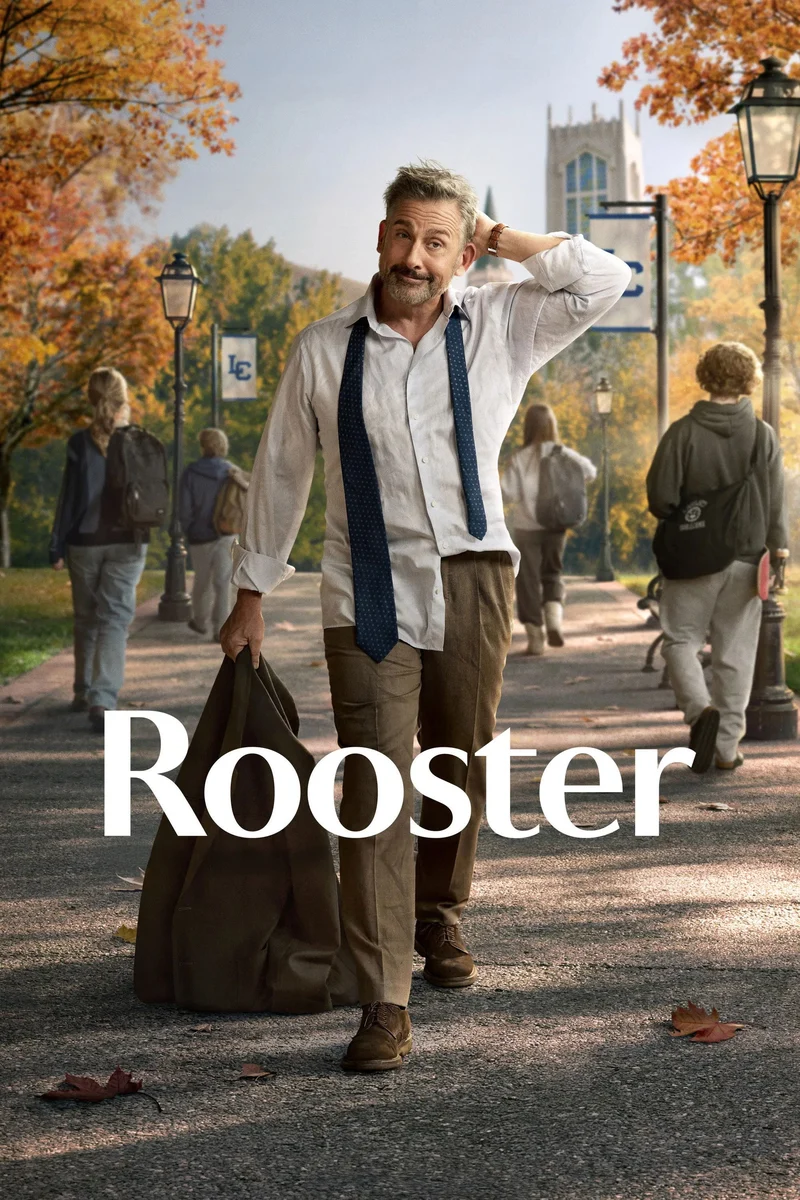
Rooster brings an author onto a college campus and makes his complicated relationship with his daughter the centre of the comedy. The setting turns expertise into a question: being accomplished does not mean knowing how to help someone close.
The family relationship is the starting point
HBO identifies Steve Carell as the author and Charly Clive as his daughter. Bill Lawrence and Matt Tarses are the co-showrunners, with Danielle Deadwyler, Phil Dunster, John C. McGinley and Lauren Tsai also in the cast. Those are useful identity markers for a title that could otherwise suggest a very different kind of story. The official premise is a college comedy about a parent and an adult child, rather than a campus sports account or an adaptation of a book called Rooster.
What the campus changes
A college can be both a workplace and a place where people are expected to discover who they are. That overlap is promising territory for a father who may be used to explaining the world through his own stories. Consider when advice is an offer and when it becomes an assertion of authority. A daughter can need support while resisting the version of her life that a parent finds easiest to understand. Comedy can emerge from that mismatch without reducing either side to a simple obstacle.
Look for the distance between intention and effect
The useful question is not merely whether the father means well. Ask whether he notices what his intervention requires other people to do. An author can revise a sentence privately; a family member cannot revise someone else’s choices on the same terms. If you enjoy relationship comedy, follow how the campus gives both people audiences beyond the family. A remark that seems harmless at home may carry another meaning among colleagues. The consequences of being publicly misread are part of the premise’s appeal.