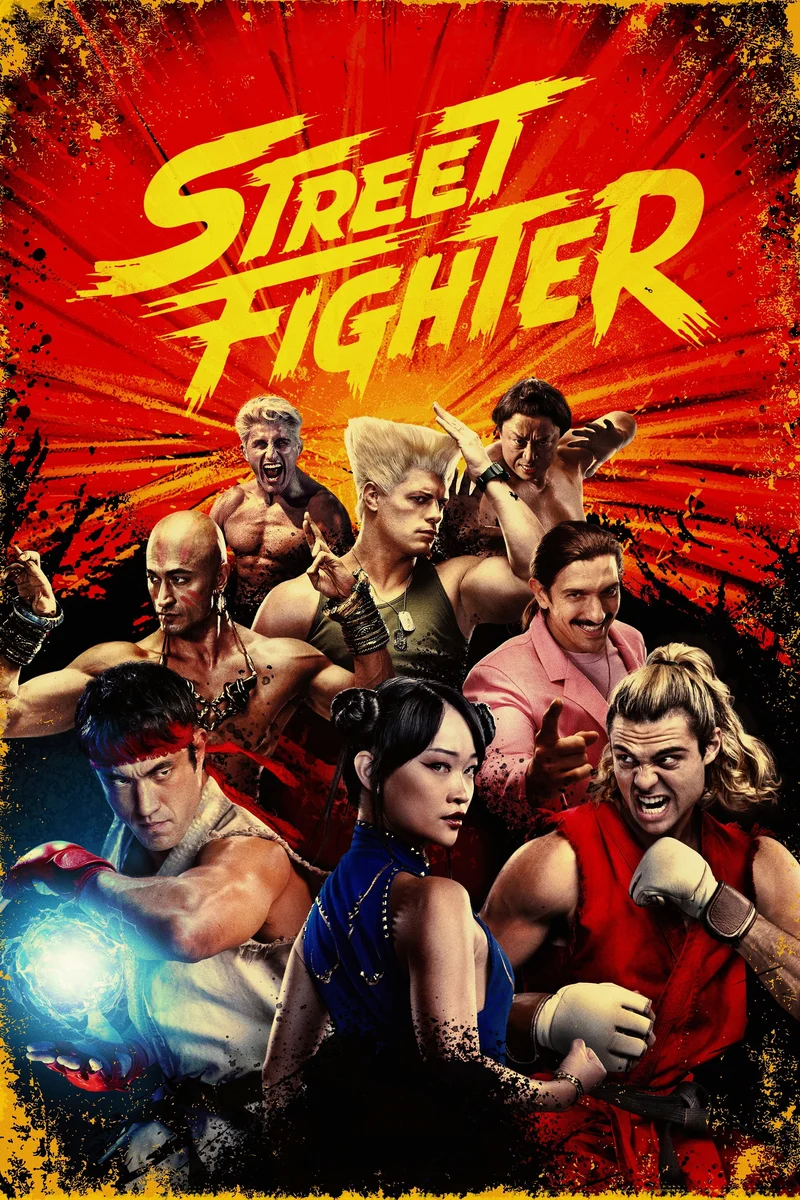
Paramount’s Street Fighter reunites Ryu and Ken through Chun-Li’s recruitment for the World Warrior Tournament. The film uses the game series’ distinctive fighters and combat styles within a story about estranged friends, personal history and a hidden conspiracy.
A tournament gives action a framework
Paramount’s synopsis places the story in 1993, with Ryu and Ken drawn back into combat. A tournament is a useful dramatic structure because it gives encounters a visible order and makes progress measurable. It also creates a question beneath the contest: are the characters trying to win the same thing? The official description of a conspiracy suggests that the tournament’s public purpose and the interests behind it need to be understood separately.
Recognizable moves need recognizable people
Kitao Sakurai directs, with Andrew Koji as Ryu, Noah Centineo as Ken and Callina Liang as Chun-Li. Paramount’s production account describes an effort to preserve the fighters’ distinct styles while giving the central relationships emotional weight. A signature move is immediately legible to a game player; a film must also make the person choosing that move legible to someone who has never held a controller. That is the adaptation challenge worth following.
The arcade connection is more than nostalgia
One-on-one games make differences between fighters part of the experience: stance, reach, pace and personality affect how a contest feels. On screen, choreography and performance can communicate those contrasts without a rules tutorial. Viewers can discuss how a scene distinguishes discipline from impulsiveness or confidence from bravado. The relationship between Ryu and Ken gives those contrasts a personal history, while Chun-Li’s involvement pushes the story beyond a private disagreement. The result can be approached as an action narrative with a specific gaming vocabulary, rather than a checklist of references to recognize.