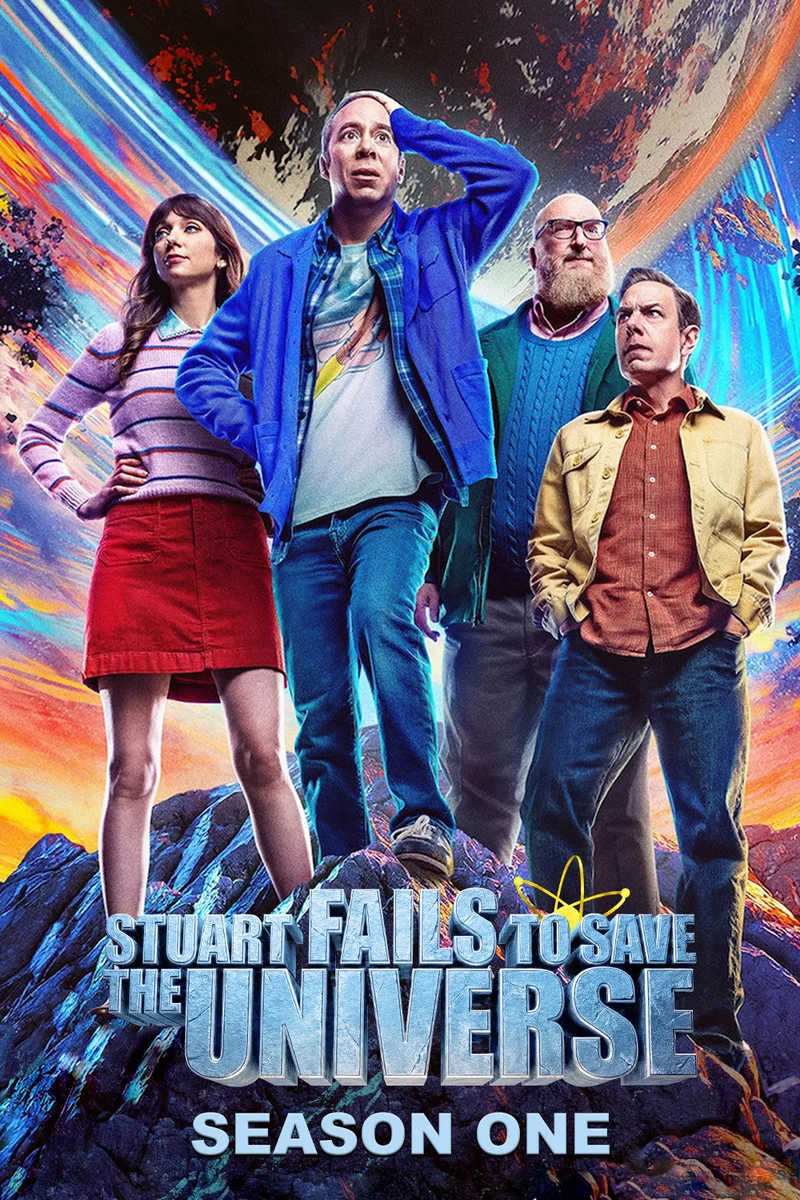
Stuart Fails to Save the Universe places a familiar supporting character in charge of a problem much larger than his comic shop. The premise turns specialist enthusiasm into a practical test: knowing fictional heroes is different from becoming one.
The connection to The Big Bang Theory
The HBO Max comedy follows Stuart after he breaks a device built by Sheldon and Leonard, creating a multiverse catastrophe. Kevin Sussman returns as Stuart, joined by Lauren Lapkus as Denise, Brian Posehn as geologist Bert and John Ross Bowie as physicist Barry Kripke. Chuck Lorre, Zak Penn and Bill Prady created the series. This establishes an actual story connection to The Big Bang Theory, rather than merely a similar style of sitcom or a coincidentally familiar character name.
Why give the supporting player the biggest job?
A secondary character often has the freedom to comment from the edge of a story. Moving that person into the centre removes the protection of the sidelines. The title itself also makes failure part of the expectation, which opens a question about what success would mean for someone usually judged on a smaller scale. Consider how a group assembled through personal relationships might respond differently from a team chosen for heroic credentials. Competence, confidence and willingness to help are not necessarily the same quality.
Use the multiverse as a character question
The official premise includes encounters with alternate versions of familiar Big Bang Theory characters. Rather than treating every variation as a puzzle to catalogue, ask what changes make a person recognisable. A different choice can expose a habit that seemed inevitable in the original setting. Previous familiarity supplies context for those variations, while the broken-device setup explains the immediate problem. For a spoiler-conscious discussion, focus on what each team member contributes, keeping surprise appearances and specific alternate identities out of recommendations to someone who has not started.