
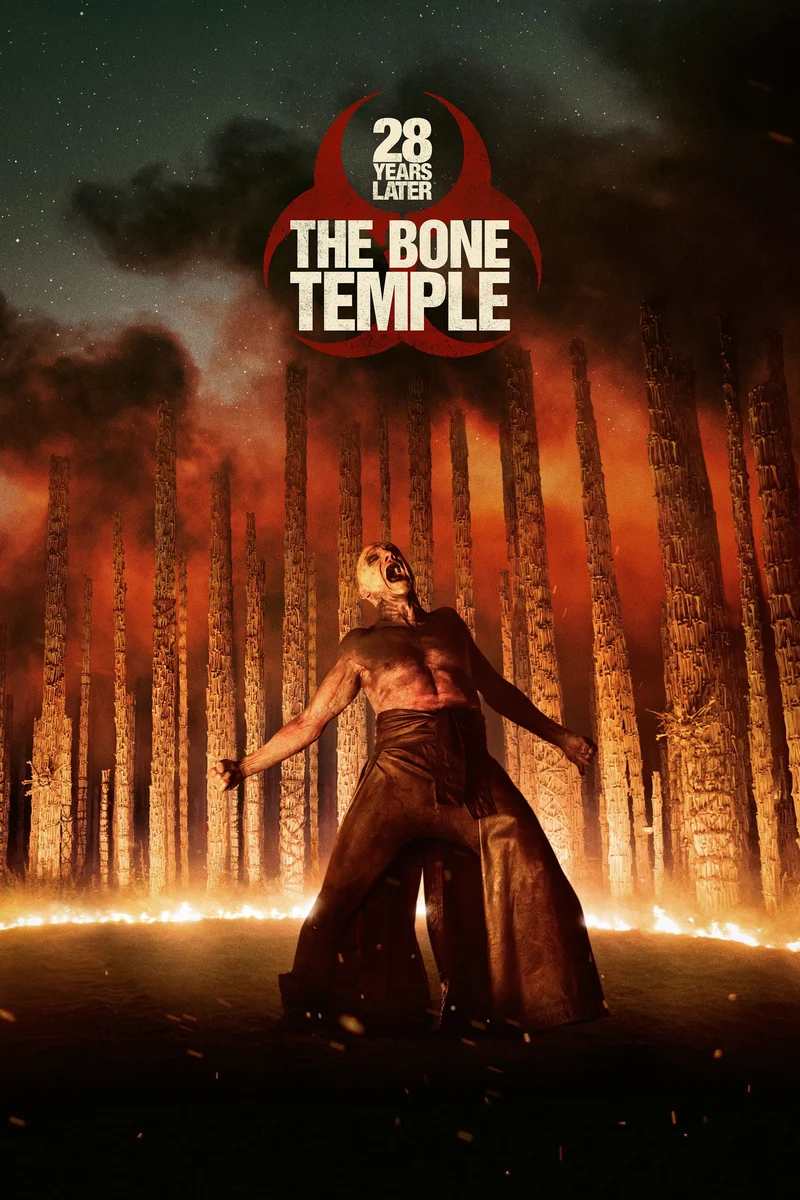
28 Years Later: The Bone Temple continues the world of 28 Years Later under director Nia DaCosta. Sony’s premise connects Dr. Kelson’s discovery with Spike’s encounter with Jimmy Crystal, while shifting attention toward the danger people pose to one another.
The environment is no longer the whole threat
An outbreak story initially organizes fear around an external infection. The Bone Temple’s official description asks what can happen inside the societies that survive it. That moves the dramatic question from escaping danger to understanding the beliefs and power structures people construct around it. The infected remain part of the world, but recognizing a human face does not automatically provide a reliable measure of safety.
Different paths through the same world
Ralph Fiennes plays Dr. Kelson, Alfie Williams plays Spike and Jack O’Connell plays Jimmy Crystal. Sony describes a discovery in one strand and an encounter that becomes a nightmare in another. That arrangement gives viewers different kinds of uncertainty: one character seeks an explanation, while another must navigate a person’s intentions. A spoiler-light introduction can identify these pressures without naming the discovery or recounting the events that make the encounter dangerous.
A continuation with a distinct emphasis
Sony identifies the film as a direct continuation of 28 Years Later, with Alex Garland credited for the writing and Danny Boyle among the producers. That relationship gives the earlier film immediate context, while DaCosta’s role distinguishes the new chapter’s filmmaking perspective. A useful discussion can ask how a long catastrophe changes the meaning of community: who offers protection, who demands belief and what price is attached to belonging? The title and confirmed premise invite that conversation without requiring a recap of every incident in the wider franchise or revealing the outcome of Spike’s path.