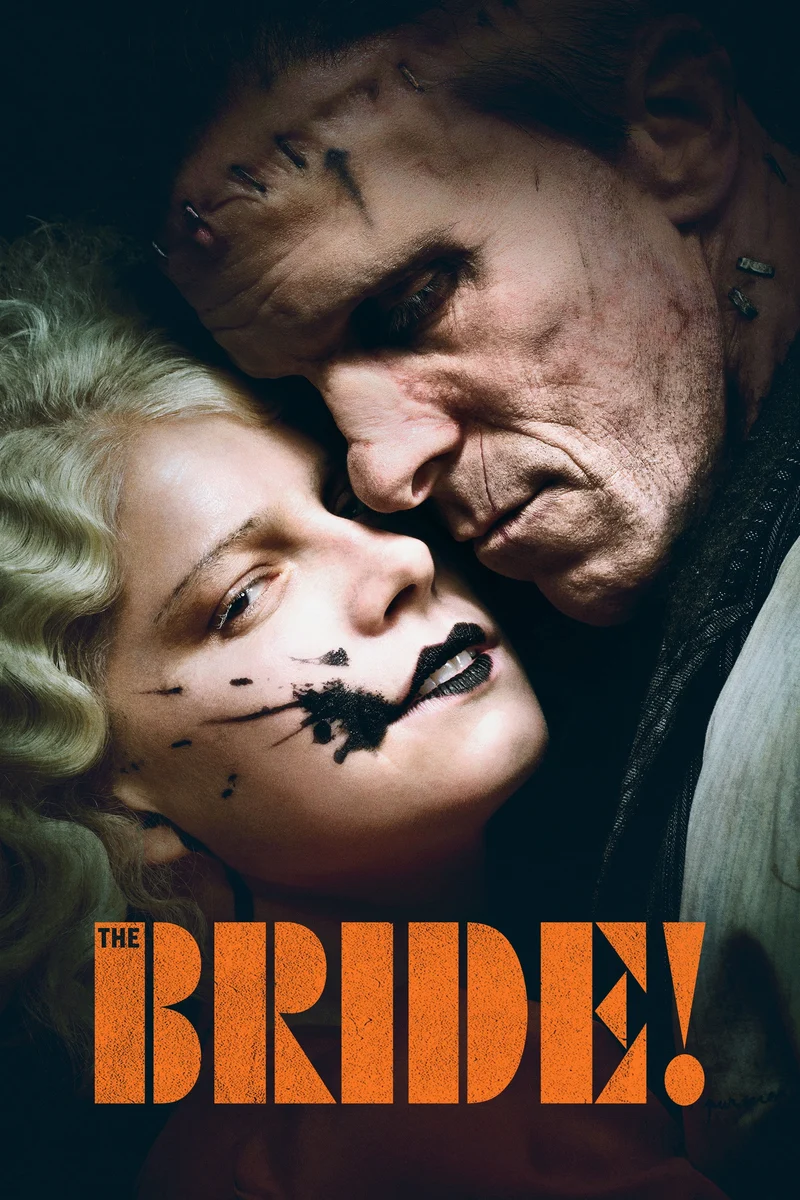
The Bride! begins with a request for companionship and turns it into a question about autonomy. A person brought into existence to answer someone else’s loneliness need not accept that assigned purpose as the limit of her life.
The official premise moves the familiar story
Maggie Gyllenhaal writes and directs the film. Christian Bale plays a lonely Frankenstein who travels to 1930s Chicago and asks Dr. Euphronious, played by Annette Bening, to create a companion. The revived young woman becomes Jessie Buckley’s Bride. Warner Bros. describes the ensuing story through romance, violence and a wider cultural movement. These are the film’s own setup and setting, rather than a requirement to treat it as a direct sequel to a particular earlier Frankenstein movie with the same sequence of events.
A companion is not an object that completes a request
The premise contains an immediate imbalance: someone asks for a person before that person can consent to being the answer. That makes the Bride’s perspective a useful centre of attention. What does she learn about the world, and who assumes a right to explain her place in it? A relationship can offer recognition while also carrying an expectation of gratitude. The question of who defines her identity gives the creation story a human conflict beyond the technical possibility of bringing a body to life.
Why the social setting matters
Moving a creation narrative into a city opens the private experiment to witnesses, institutions and public interpretation. A couple can become an image that other people use for their own purposes, particularly when their behaviour disrupts accepted roles. Consider how the film distinguishes what the Bride wants from what onlookers believe she represents. Previous monster-film knowledge can supply comparisons, but the official premise already provides the immediate relationships. For an introduction, those relationships are more useful than listing every later act of rebellion or revealing how the romance resolves.