
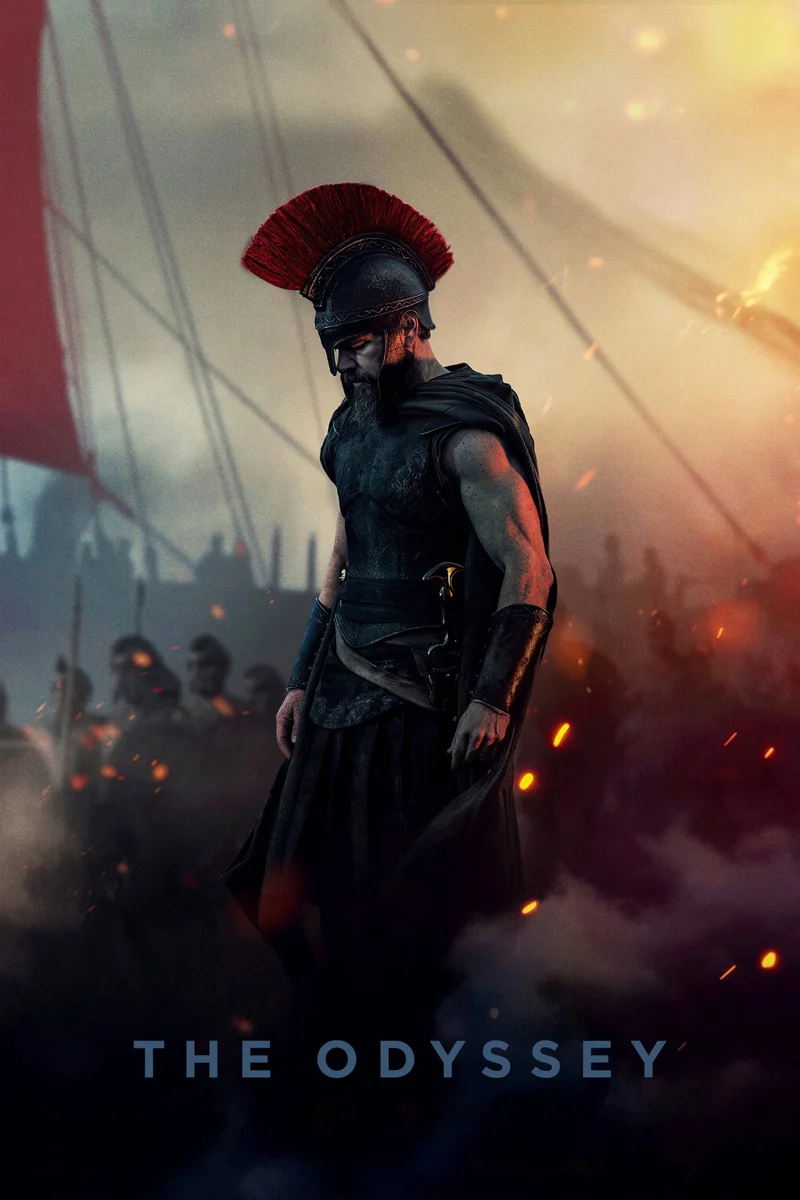
The Odyssey brings Homer’s saga into Christopher Nolan’s filmmaking. The scale is an obvious attraction, but the useful narrative question is intimate: what does returning home mean after a journey has changed both the traveller and the people waiting?
The adaptation has clear human anchors
Universal identifies Nolan as writer and director, with Emma Thomas producing alongside him. Matt Damon plays Odysseus, Anne Hathaway plays Penelope and Tom Holland plays Telemachus. The studio’s trailer coverage also identifies Charlize Theron as Calypso. These names locate the film within Homer’s world without turning an introduction into a complete itinerary of encounters. It is a mythic adaptation with its own dramatic choices, rather than a promise that every episode from a long poem will receive identical attention or ordering.
Homecoming is more than reaching a destination
A journey can be measured by distance, but a homecoming also asks whether a person can resume an old place in a family. Waiting creates its own history for the people who remain. Keep those two forms of time beside one another when considering an adaptation of this story. A spectacular obstacle can then be read for what it delays, changes or demands, rather than only for the creature or location it presents. The destination carries emotional weight because other lives continue there in the traveller’s absence.
What the production format tells you
Universal describes The Odyssey as the first feature shot entirely with IMAX cameras. That is a fact about image capture, not a guarantee that every cinema, disc or streaming presentation uses the same image dimensions. As an adaptation question, consider how physical scale can place a single person within a world of forces larger than them. Readers of Homer can compare perspective and emphasis; newcomers can begin with the central family relationships. Neither route requires knowing the outcome of every encounter before the film introduces it.