
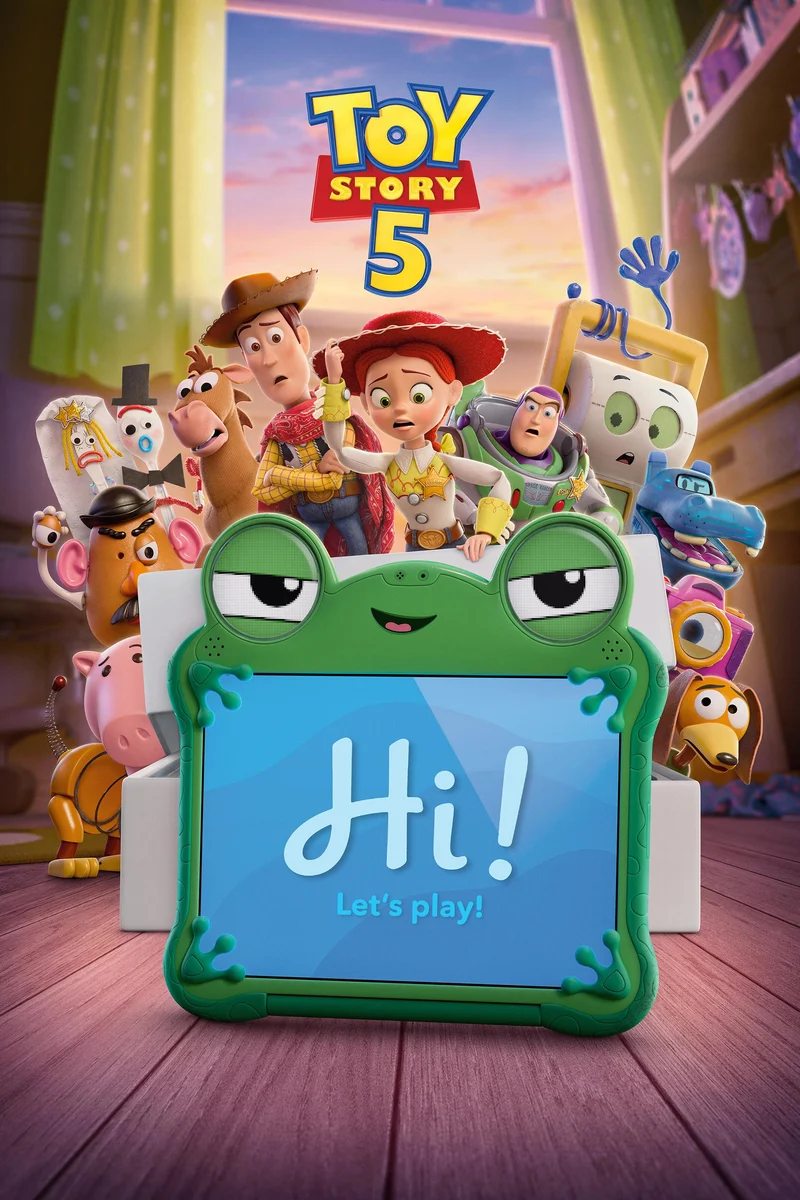
Toy Story 5 brings Woody, Buzz and Jessie into a familiar household problem: the place of toys when a child’s attention moves toward technology. Pixar and Disney frame the film around Bonnie and the arrival of a tablet called Lilypad.
An object with a different claim on attention
Lilypad is not simply another toy competing for a shelf. In the official premise, the tablet arrives with its own ideas about what is best for Bonnie, challenging the toys’ sense of purpose. That gives the conflict a recognizable shape: adults and children also negotiate between physical play, screens and the routines that surround them. The film’s premise offers a comic version of that conversation without providing evidence for a universal judgement about children’s technology use.
The continuity is emotional
Disney’s announced returning voices include Tom Hanks, Tim Allen and Joan Cusack, while Greta Lee voices Lilypad. Andrew Stanton directs, with Kenna Harris co-directing. The recurring characters matter because the series builds meaning around attachment, usefulness and letting a child grow. A viewer does not need an inventory of every earlier object to recognize the central question: what happens when something that has defined its life through being needed is no longer the obvious choice?
A family discussion beyond a winner
The most useful conversation suggested by this setup is not which side should defeat the other. It is how different kinds of play feel, what companionship means and whether a change in attention must mean that an old relationship is worthless. Those are discussion prompts derived from the announced premise, not a report of the film’s resolution. There is also a difference between a toy being physically present and a child giving it an imagined role. That distinction can make a family conversation about play more interesting than simply counting minutes spent with one object or another.