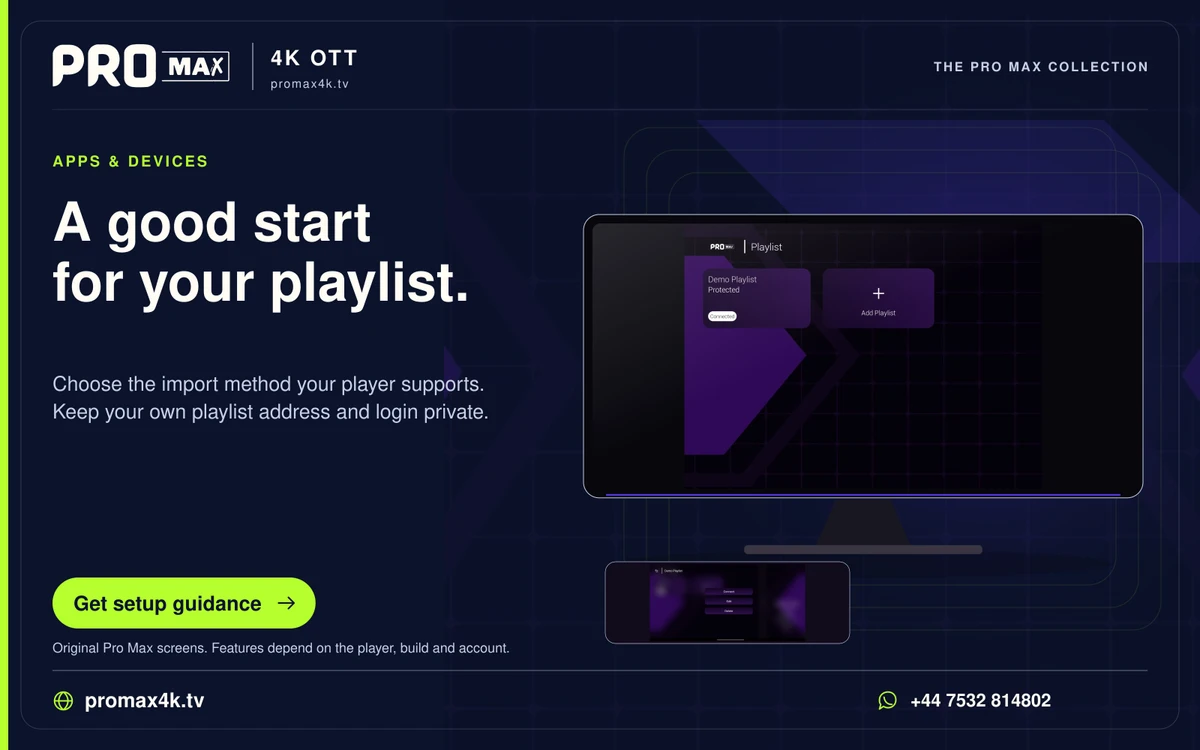
A playlist format describes the list the player imports. A media container describes how audio and video are packaged within a stream. An M3U list can point to different delivery types, so changing the list extension does not convert the media or make an unsupported container compatible.
Name the layer you are changing
A service’s output option can affect the returned list, stream route or media packaging depending on its implementation. Use the provider’s documented choices. Do not assume that a parameter with a familiar name behaves identically across services.
Avoid extension-based conclusions
An address ending in .ts or .m3u8 is a clue, not a complete inspection of the returned media. Servers can use routes without extensions or return an error document at a media-looking URL. The actual response and decoder capability matter.
Keep a reversible comparison
If support supplies two supported output options, test the same authorized station with one change at a time. Record which option was selected and the symptom. Avoid combining a format change with account replacement and app reset.
A practical sequence
0 of 3 steps completed on this page.
An example to work through
A file named channels.m3u can contain stream addresses ending in .m3u8. The outer list organizes channels; the inner resources handle media delivery.
Questions about this topic
Does .m3u mean the video is encoded as M3U?
No. M3U is a playlist format.
Will renaming a URL convert the media?
No. The server’s response determines what is delivered.