A reorder point estimates the balance at which you need to arrange more inventory. A simple model uses expected credit use during replenishment time plus a chosen buffer. The inputs should come from actual usage and the supplier’s confirmed process, not a promise that every enquiry will become a sale.
Measure usage in credits
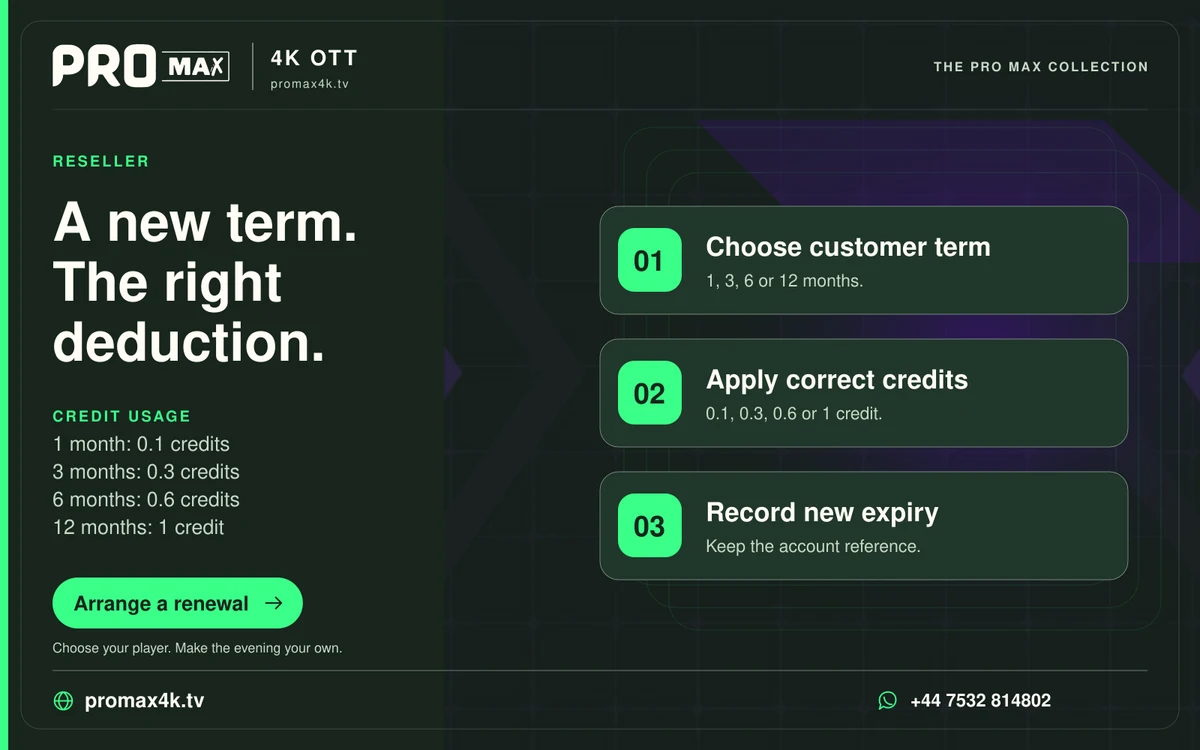
Customer counts alone do not measure credit use. Pro Max consumes 0.1, 0.3, 0.6 or 1 credit for a 1-, 3-, 6- or 12-month term. Record the actual mix of customer terms and the resulting deductions. Keep trials and adjustments separate from paid allocations when estimating daily use.
Use a real replenishment assumption
The supplied project facts do not establish instant top-ups or a guaranteed processing time. Ask support what the actual process requires. A lead-time estimate should be labelled and reviewed when observed timing changes.
Treat the buffer as a choice
A buffer reduces the chance of running short under the model but also ties up funds. It is not a service guarantee. Review it alongside actual demand and the terms governing unused credits.
A practical sequence
0 of 3 steps completed on this page.
An example to work through
With a hypothetical use of twelve credits per day, three days of lead time and a fifteen-credit buffer, the reorder point is 12 × 3 + 15 = 51 credits.
Questions about this topic
Does this formula guarantee availability?
No. It depends on uncertain demand and replenishment inputs.
Can customer count replace credit usage?
Only if every customer consumes the same confirmed amount, which should not be assumed.