A brand name, a 4K logo and an attractive app screenshot do not establish the resolution of every source or the simultaneous-stream allowance of an account. Describe the actual plan facts and separate them from device capability and programme availability. A customer should be able to see which statement comes from the order terms and which one describes only the software or display.
Separate the layers
The display can support a resolution that the source does not provide. The player can show several installed accounts while one service allows only a particular number of simultaneous streams. These are different layers. Sales copy should not combine the largest capability of each layer into one universal promise. Use the actual product facts and keep an account-specific condition beside the relevant claim.
Use screenshots for what they show
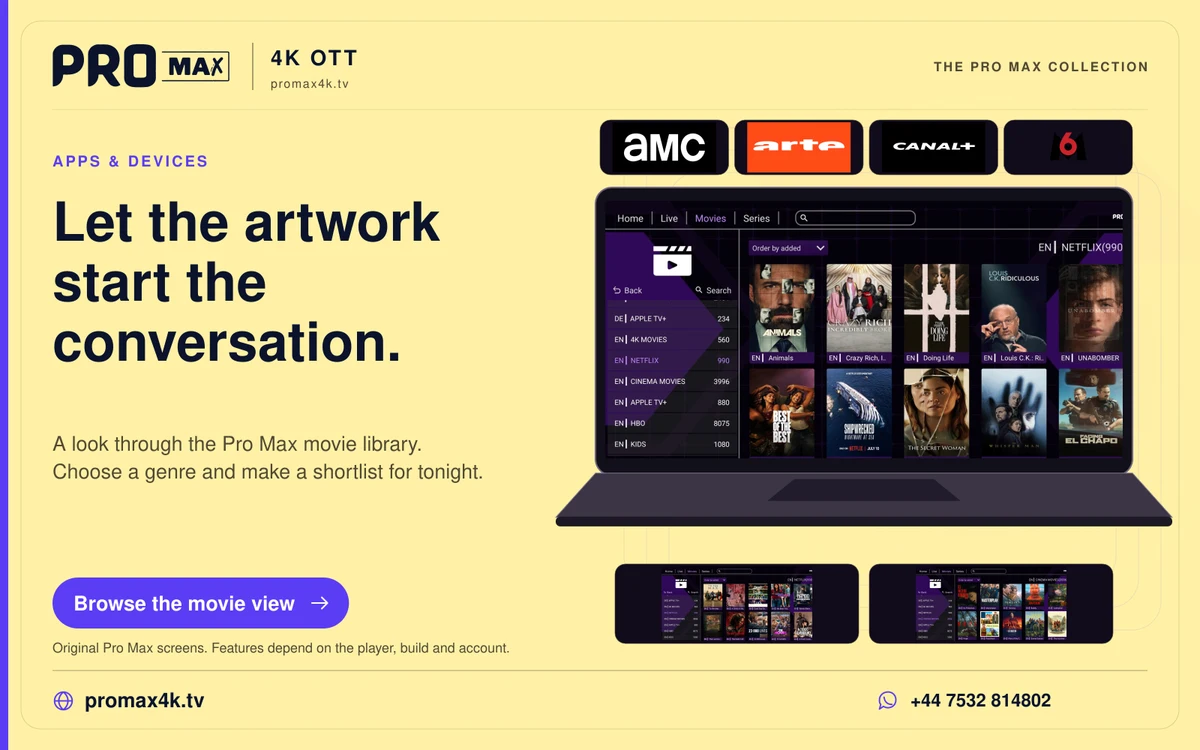
A screenshot can demonstrate category navigation, artwork or a menu. It does not prove current catalogue counts, a live channel’s resolution or a commercial partnership. Keep the caption focused on the interface. If an example is illustrative, say so clearly. Avoid converting the number of visible tiles into an invented count of programmes supplied to every customer.
Make the purchase conversation specific
Ask which screen and player the customer intends to use, and arrange the trial after installation. The trial can help the household understand that setup; it does not create a blanket guarantee for all devices or future sources. Agree the actual connection allowance and activation details through the real order process before payment.
A practical sequence
0 of 4 steps completed on this page.
An example to work through
A television supports4K and the player displays a 4K badge. A particular live source may still be1080p. Likewise, having the app on two devices does not establish permission to stream on both at once.