
HTTP
HTTP is an application protocol for requesting resources and receiving responses.
Explore →Definitions, mechanisms, examples and practical guidance for delivery concepts used in streaming and player setup.
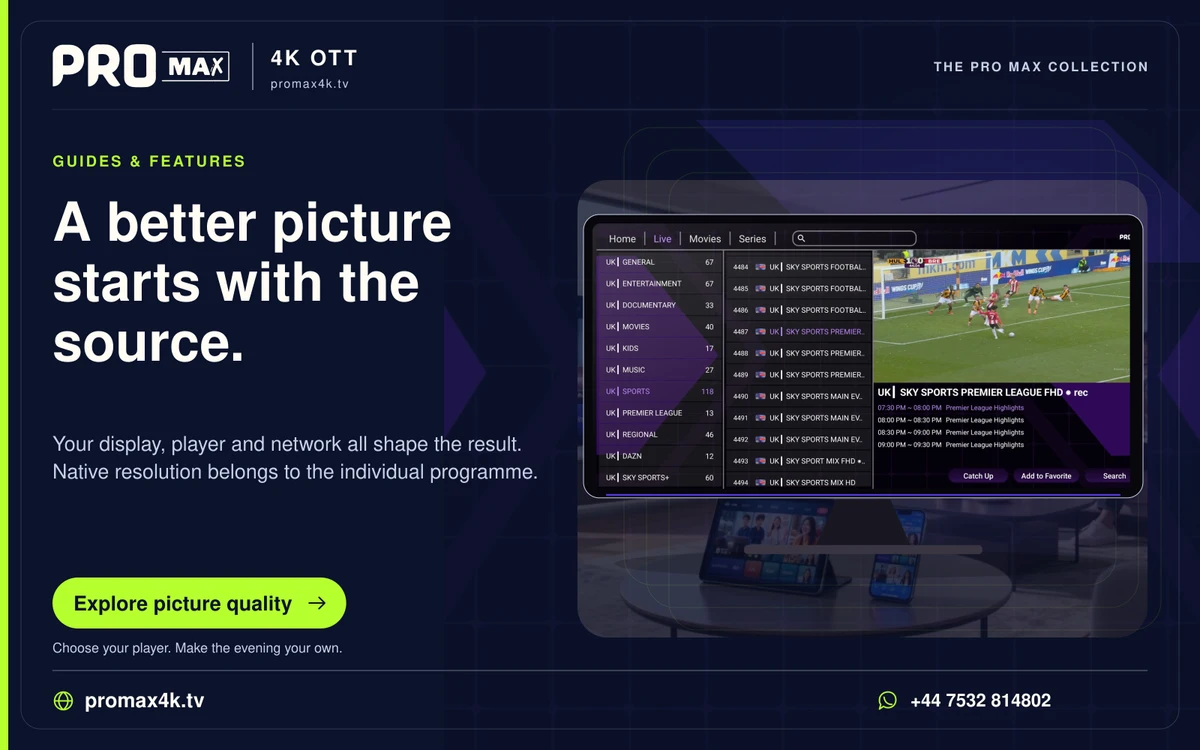
HTTP is an application protocol for requesting resources and receiving responses.
Explore →HTTPS uses TLS to protect HTTP communication and authenticate the server named in the connection.
Explore →A content delivery network, or CDN, distributes resources through multiple delivery servers so that clients do not always fetch everything from one origin.
Explore →An origin server is the authoritative upstream source for a web resource within a delivery arrangement.
Explore →A cache hit occurs when a cache can satisfy a request using an eligible stored response instead of obtaining the complete resource again from an upstream server.
Explore →Cache invalidation is the process of removing a stored response or making it ineligible for immediate reuse after its underlying information changes.
Explore →HTTP 401 Unauthorized means the request lacks valid authentication credentials for the target resource.
Explore →HTTP 403 Forbidden means the server understood a request but refuses to fulfill it.
Explore →HTTP 404 Not Found means the server did not find a current representation for the requested resource, or is unwilling to disclose that one exists.
Explore →HTTP 429 Too Many Requests means a server considers the client's request rate excessive under its policy.
Explore →HTTP 500 Internal Server Error means the server encountered an unexpected condition that prevented it from fulfilling the request.
Explore →HTTP 502 Bad Gateway means a server acting as a gateway or proxy received an invalid response from an upstream server while handling the request.
Explore →HTTP 503 Service Unavailable means the server is currently unable to handle the request, commonly because of temporary overload or scheduled maintenance.
Explore →HTTP 504 Gateway Timeout means a server acting as a gateway or proxy did not receive a timely response from an upstream server needed to complete the request.
Explore →A streaming manifest is a document that describes how a player can obtain and assemble a media presentation.
Explore →HTTP Live Streaming, or HLS, is a media delivery format that uses playlists and separately addressable media segments retrieved over HTTP.
Explore →An HLS master playlist describes alternative ways to play a presentation, such as video variants at different bitrates and groups of audio or subtitle renditions.
Explore →A media segment is a separately retrievable piece of a segmented presentation.
Explore →Adaptive bitrate playback selects among multiple encoded representations of a presentation as network and playback conditions change.
Explore →Progressive download delivers a media file while allowing playback to begin before the entire file has arrived.
Explore →A byte-range request asks an HTTP server for selected byte positions within a resource rather than its complete contents.
Explore →An HLS discontinuity marks a boundary where a player must account for a change in the media sequence instead of assuming an uninterrupted continuation.
Explore →An initialization segment supplies information a player needs to interpret associated media fragments.
Explore →Install the app for your screen, then WhatsApp the Pro Max team for a one-day free trial. Already watching? Go straight to the viewer help desk.