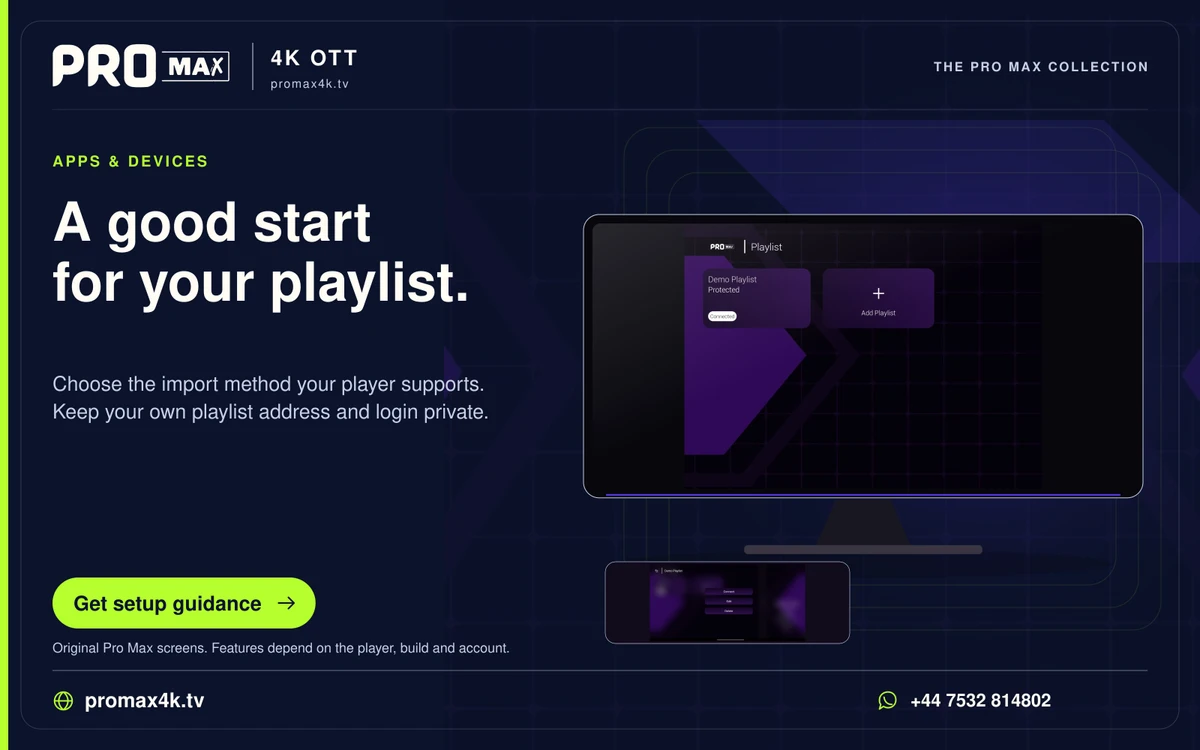
A local playlist is a saved snapshot; a remote URL can let the player fetch an updated list. Neither is automatically better for every household. The useful distinction is whether you need source updates, a stable personal copy, or a controlled test that will not change while you investigate an issue.
Understand the update trade-off
A local file will not automatically receive new entries or corrected addresses unless you replace it. A remote list can change on refresh, which is convenient for maintenance but can overwrite edits made to a downloaded copy.
Protect both forms as account data
A saved playlist can contain credentials inside every stream URL. A remote link can contain them once in its query. Treat both as private, including backups, email attachments and shared folders. File format does not reduce the sensitivity.
Use a snapshot for comparison
A dated local copy can help show that a channel was renamed or a group changed. Keep only what you need, with restricted access. Do not keep indefinite archives of live credentials just to document cosmetic differences.
A practical sequence
0 of 3 steps completed on this page.
An example to work through
A local list saved on Monday may keep an obsolete channel address after the remote source is corrected on Tuesday. Refreshing the local file requires replacing the snapshot.
Questions about this topic
Does a remote link contain the video itself?
Usually it identifies a list of sources rather than one large video file.
Is a local file safer to share?
No. It can contain the same private account details.